
How Arrest Warrants Work in Highland County
Virginia Code § 19.2-71 lets a judge, a clerk of the Circuit, General District, or JDR Court, or a magistrate acting within statutory authority issue criminal process in Highland County. A sworn complaint or a similar authorized filing backs the request. The resulting warrant directs an arrest. A summons is different; it only orders the person to appear. Once issued, the Highland County court that issued the process controls the file and every later appearance or release decision. The sheriff serves it and handles execution questions. A search result helps you find the case, but only the clerk or magistrate can confirm what process exists there.
Highland County Arrest Warrant Issuers
Local process is divided by court level. Circuit Court handles felony criminal files and indictment matters. General District Court handles adult misdemeanors, traffic, and preliminary felony hearings. JDR handles juvenile, domestic, and support proceedings, where public access is limited.
The Highland magistrate office is listed at 145 W. Main Street and is marked video-only in the statewide directory. The court's Virginia issuance statute defines which judicial officers may issue process.
The Virginia issuance statute appears below with the authorized issuer rules.
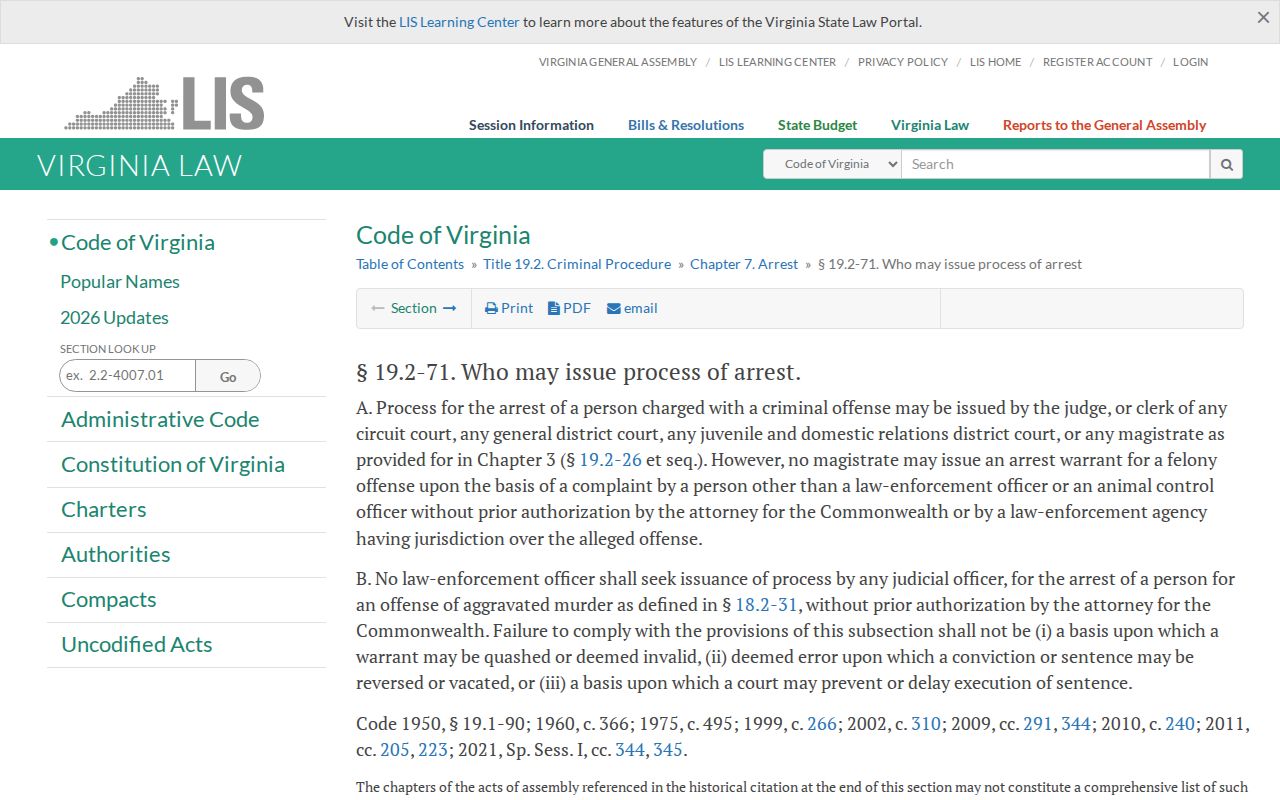
The page is a state rule, not a record of an individual Highland case.
Arrest Warrants: What They Contain
Highland County publishes no public arrest-warrant list and sets no local number format. State forms show the kinds of details a warrant may carry. What any court displays publicly depends on the court and the case.
| Issuing court | Circuit, GDC, JDR, or a magistrate acting under state law. |
|---|---|
| Case identifiers | Case number or offense tracking number; local warrant format is not published. |
| Charge | Offense, statute, Virginia Crime Code, and charge level where entered. |
| Process type | Felony or misdemeanor warrant, capias, summons, or related court process. |
| Release terms | Bond or recognizance conditions if the judicial officer sets them and the record displays them. |
| Return | Execution date and officer or jail return event under state procedure. |
Codes like DC-312 name a form type. They are not a Highland County case number.
Highland County Felony Warrant Authorization
A felony complaint from a private person or animal control needs a prior green light. Under the review rule, the Commonwealth's Attorney or a law-enforcement agency with jurisdiction must authorize it before a magistrate may issue the warrant. That review role does not make the Commonwealth's Attorney's Office a public warrant-search desk, though. Highland lists its Commonwealth's Attorney at 165 Courthouse Lane, Monterey, and (540) 468-1122. For a felony court file, the Circuit clerk at (540) 468-2447 is the right contact. The office page can route a process question, but only the issuing court confirms the docket.
How Warrants Get Served in Highland County
Section 19.2-76 lets an officer execute a warrant, capias, or summons issued anywhere in Virginia within that officer's jurisdiction. A jail officer may execute process on a person already held in a regional jail. The officer or jail officer endorses the date and returns the process to a judicial officer.
The sheriff's office at 145 W. Main Street is Highland's county law-enforcement route. The statewide directory also lists a Middle River Regional Jail magistrate channel in Staunton, but it does not set a Highland booking or surrender procedure.
The execution and return provision describes the officer's role after service.
The execution and return statute appears below.
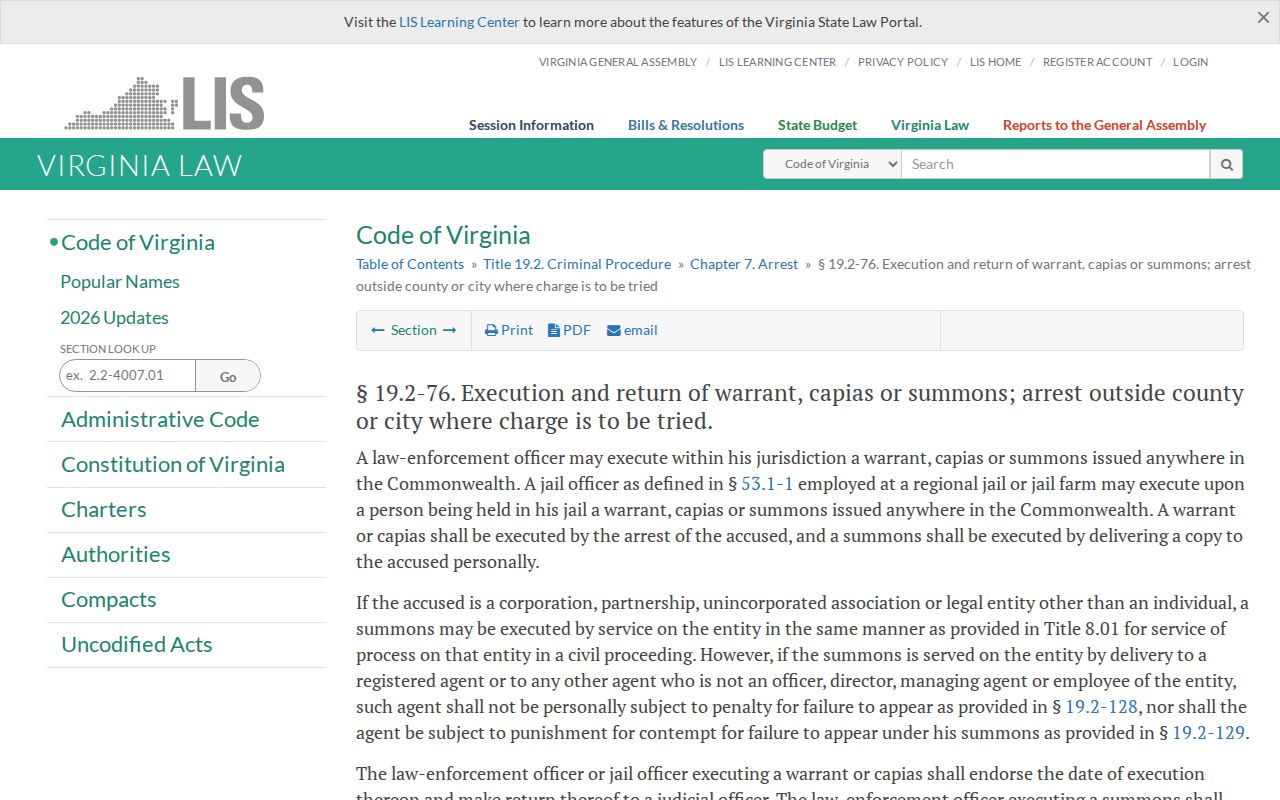
The return goes back to the issuing court in Highland County. The sheriff does not decide whether a case is dismissed.
Highland County Arrest Warrant Forms
Virginia's public district forms label a felony arrest warrant DC-312, a state misdemeanor warrant DC-314, a local misdemeanor warrant DC-315, recognizance DC-330, and capias DC-361. These are statewide form names, not proof of a specific local warrant or its status.
The Virginia criminal forms index lists the forms. No Highland-specific warrant-recall form, public bond schedule, or surrender instruction was found.
The official criminal-form catalog appears below with those state labels.
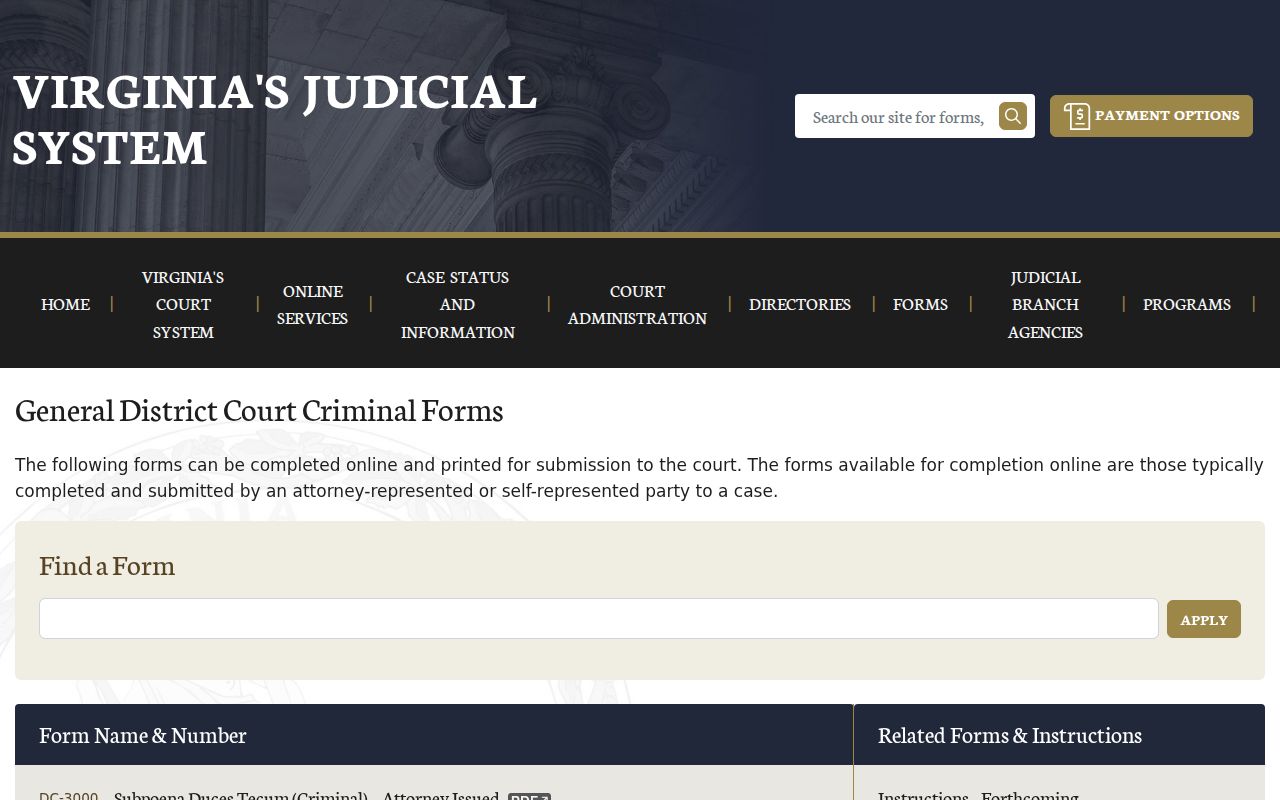
Ask the Highland County clerk which form or process applies to the actual case.
Arrest Warrants, Summonses, and Bench Warrants
These terms are not interchangeable. A summons orders an appearance and is served in person. A warrant authorizes an arrest when executed. People often say "bench warrant" for court process issued after a failure to appear or comply. In Highland County, as across Virginia, a felony indictment can produce a capias.
| Document | Why it may issue | Highland confirmation |
|---|---|---|
| Arrest warrant | Authorized criminal process based on a charge | Issuing clerk or magistrate |
| Summons | Notice to appear or answer a matter | Clerk for the court named on it |
| Bench / capias process | Indictment, missed setting, or court-directed event | Issuing court; Circuit for felony indictments |
Ask the Highland County clerk for the exact document name rather than guessing the next step from a label.
Highland County Warrant Service and Return
Each office has its own job. The issuing official creates the process, the clerk tracks the docket, and the sheriff or another law-enforcement agency handles service routing. A return may show that process was served or not served; it does not erase the underlying case. Virginia procedure allows an officer to execute process statewide within the officer's jurisdiction, and a jail officer may serve someone already in custody. A federal matter is different. County and state court records in Highland County are not the controlling source there.
If There's an Arrest Warrant for You
Call the Highland County clerk first. Ask whether the court shows active process, what kind it is, and what the court wants next. If the clerk directs a surrender, call the sheriff before traveling and confirm the location and hours. A Virginia attorney can advise you before you appear.
Confirm first: Highland publishes no warrant walk-in schedule, dedicated bond window, or public bond amount. Do not assume the courthouse, sheriff's office, or regional jail can process a walk-in at a particular time.
Bond and release terms in Highland County rest with the judicial officer and the case itself. Ask where a bond may be posted, what payment the clerk takes, and which court date still stands once you are out. Get a receipt or order that proves what was done.
Before a Highland County Warrant Surrender
Before you surrender on a Highland County warrant, know where each office sits. The public directory puts the sheriff and the magistrate at 145 W. Main Street, with clerk offices at 165 W. Main Street. Those doors are a short walk apart. No local source describes a walk-through route or an after-hours surrender desk. Call the sheriff at (540) 468-2210 and the issuing clerk before you set out. The clerk can explain the case record and what court step the file requires. The sheriff handles service and custody questions. A magistrate makes the initial release decision when authorized. Same-day release, a set bond amount, and an online update time are never guaranteed, so start with the Highland County warrant steps and ask the office that controls the case.